Choose the right timber
Board species, treatment and thickness affect appearance, care and cost. Compare the actual specification rather than choosing by colour alone.

The warmth of real wood, shaped around your garden. Explore timber decking for seating areas, outdoor dining and a natural connection to your home.
Discuss your project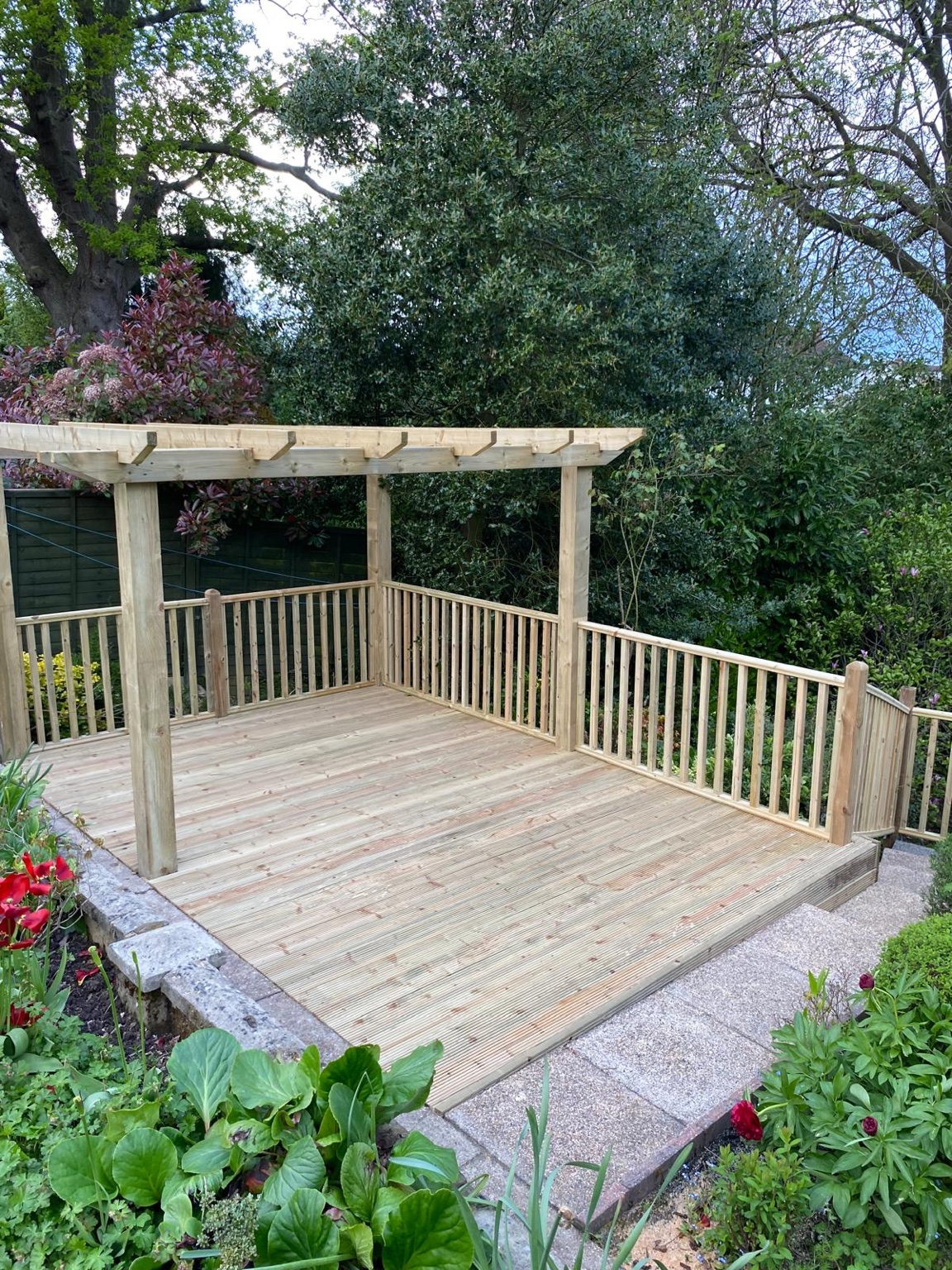
For gardens in Hythe, exposure and how the space dries after wet weather are useful starting points. Ask about suitable fixings, easy-clean detailing and how the deck will drain.
Whether you are replacing an ageing deck or creating a new garden seating area, the layout should suit the way you use your space. Allow for furniture, clear walking routes and changes in level before settling on the dimensions.
Board species, treatment and thickness affect appearance, care and cost. Compare the actual specification rather than choosing by colour alone.
Timber needs cleaning and may need periodic oiling or staining, depending on the product. Exposure and shade influence how frequently it needs attention.
Check the condition and specification of the supporting frame. Board spacing, fixings and ventilation need to suit the chosen timber.
Both are real timber. Choose the actual species, outdoor suitability and finish rather than relying on the category alone.
Softwood can offer a lower initial board cost, with visible grain and knots. Confirm the proposed treatment, board dimensions and frame specification. Cleaning and any chosen oil or stain become part of its ongoing care.
Include the frame, preparation, steps and removal work when comparing the installed price.
Hardwood offers a range of natural colours and grain patterns. Outdoor durability varies by species; the word hardwood alone is not a guarantee. Compare actual samples, timber suitability, sourcing and fitting details.
Discuss how the colour will weather and what maintenance the selected finish requires.
| Consideration | Softwood | Hardwood |
|---|---|---|
| Initial budget | Often a lower board cost; treatment and grade still matter. | Depends on species, dimensions, sourcing and fitting. |
| Appearance | Natural grain and knots; colour changes with exposure. | Species-specific grain and colour, also affected by weathering. |
| Outdoor suitability | Confirm appropriate timber treatment or inherent durability for its intended use. | Confirm the actual species and outdoor durability. |
| Care | Cleaning and attention to the chosen coating. | Cleaning and a routine suited to the species and finish. |
Both options need suitable supports, outdoor fixings, drainage and ventilation. Ask for the complete specification before choosing.
For your timber decking project, ask for a written specification showing the board range, supporting frame, finished height and treatment of edges. If there are steps or an existing deck to remove, include them in the scope from the start.
When comparing proposals, check access, waste removal, care instructions and which parts of the work are included. Any product warranty should be explained separately from installation terms.
Our Kent decking cost guidance explains the preparation, materials and finishing details that affect your quote. Read the planning checks before choosing a raised layout.
Yes. Decking Masters Kent offers timber and composite decking in Hythe, with coverage across Kent and the surrounding locations shown on our areas page.
Timber offers natural grain and can be refinished, but needs ongoing care. Composite usually needs less maintenance and offers a more uniform finish. The right choice depends on your budget, the look you want and how much upkeep suits you.
The deck size, board specification, ground conditions, supporting frame, site access and extras such as steps or balustrades all affect the cost. A useful quote should explain these items separately.
An existing deck can be replaced, but the frame should be checked for rot, movement and suitability for the new boards. Changing only the surface is not always the right solution.
Include your postcode, approximate dimensions, a few photos, your preferred material and any access restrictions. Mention changes in level, old decking to remove and whether you need steps or handrails.
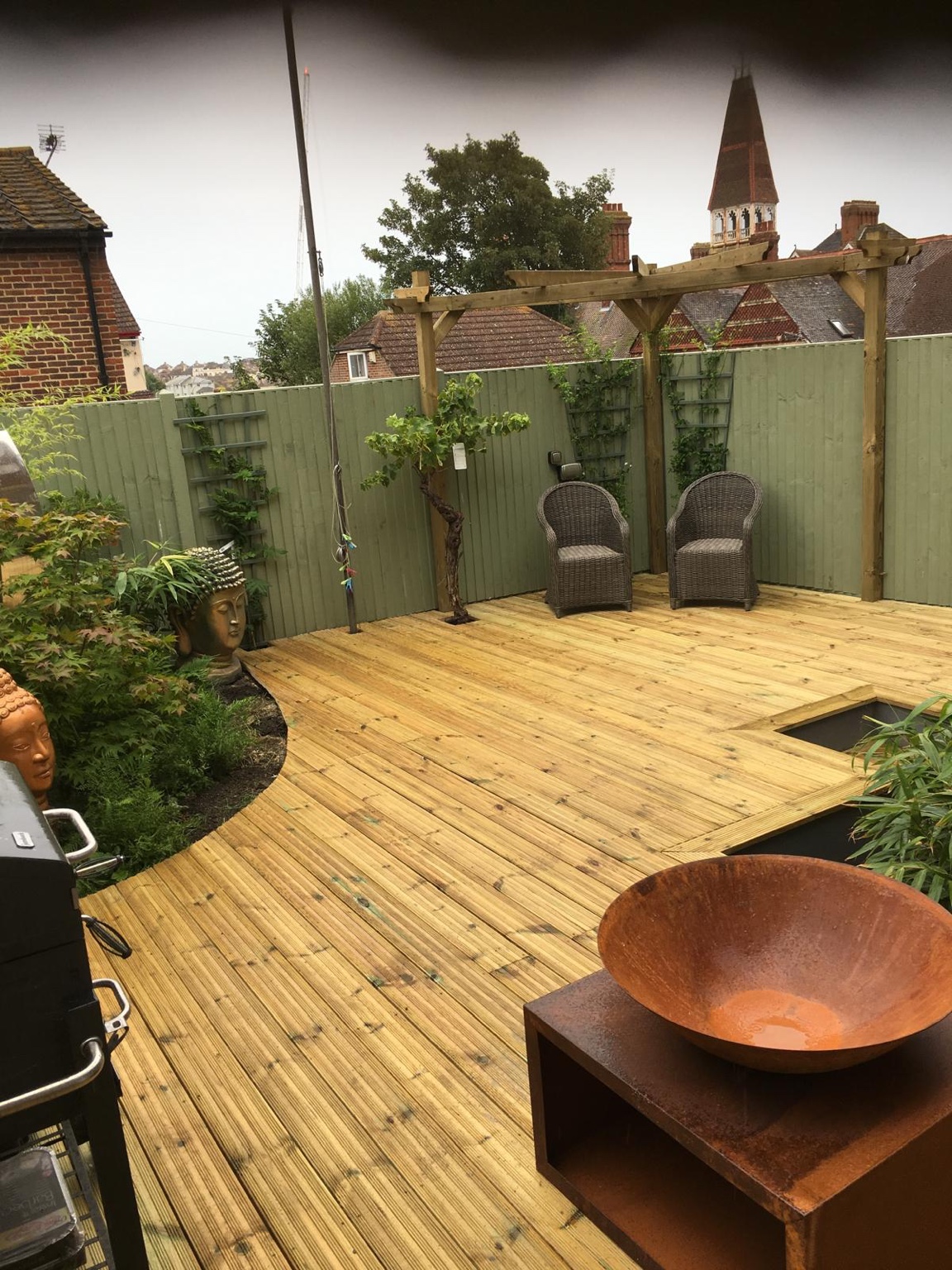
Warm timber decking, a curved planting edge and an open timber pergola create a quiet seating space with inset steps.
View the projectA timber garden platform combines an open pergola with a matching balustrade, set among mature trees and planted borders.
View the projectTell us where you are, the size of your space and what you have in mind.